This study aims to thoroughly investigate the effectiveness of fiqh learning on students’ worship practices at MTsN 2 Agam. With the continuous growth in religious education, a strong understanding of Islamic teachings becomes increasingly important for students in educational institutions like MTsN 2 Agam. Fiqh, as a branchq of Islamic knowledge that studies practical laws and rules of worship, forms the core of the religious curriculum in this school. This study will explore the extent to which fiqh learning in fiqh classes at MTsN 2 Agam influences students’ understanding of worship practices such as prayer, fasting, and almsgiving. Emphasis will be placed on the practical guidance imparted in fiqh learning, which includes correct techniques and procedures in performing these rituals. Additionally, the study will observe how a strong understanding of religious principles, taught through fiqh learning, impacts students’ daily lives outside the school environment. Through careful data collection and analysis, this research aims to provide a better understanding of how fiqh learning at MTsN 2 Agam influences students’ worship practices. The findings of this research are expected to provide valuable insights for the development of religious curricula in similar educational institutions and also shed light on the importance of fiqh education in shaping individuals who are obedient to religious teachings and reflect high moral values and ethics in their interactions with others.
This research aims to explore innovative educational strategies necessary to strengthen global skills in the 2045 Golden Generation. Through an in-depth analysis of the dynamics of social, technological, and global economic complexities, the article identifies substantial challenges in preparing the next generation for a rapidly changing world. Within this context, the study highlights the urgency for a profound transformation in the education system to integrate essential and relevant skills aligned with an increasingly interconnected and diverse world. The research suggests that project-based learning, leveraging advanced technology, and enhancing cross-sectoral collaboration are key to addressing these challenges. Through appropriate technology integration, new opportunities arise to facilitate more adaptive and responsive learning tailored to individual student needs. Furthermore, close collaboration among formal education, industry, and community institutions can provide more contextual and relevant learning experiences. By offering concrete solutions, this research not only provides deep insights into the complexity of challenges facing education but also depicts the transformative potential of innovative education in shaping an inclusive, dynamic, and highly competitive education future. Therefore, this research is relevant to education academics and practitioners and policymakers, industry stakeholders, and the broader community concerned with sustainable and inclusive future development.
This research aims to explore innovative educational strategies necessary to strengthen global skills in the 2045 Golden Generation. Through an in-depth analysis of the dynamics of social, technological, and global economic complexities, the article identifies substantial challenges in preparing the next generation for a rapidly changing world. Within this context, the study highlights the urgency for a profound transformation in the education system to integrate essential and relevant skills aligned with an increasingly interconnected and diverse world. The research suggests that project-based learning, leveraging advanced technology, and enhancing cross-sectoral collaboration are key to addressing these challenges. Through appropriate technology integration, new opportunities arise to facilitate more adaptive and responsive learning tailored to individual student needs. Furthermore, close collaboration among formal education, industry, and community institutions can provide more contextual and relevant learning experiences. By offering concrete solutions, this research not only provides deep insights into the complexity of challenges facing education but also depicts the transformative potential of innovative education in shaping an inclusive, dynamic, and highly competitive education future. Therefore, this research is relevant to education academics and practitioners and policymakers, industry stakeholders, and the broader community concerned with sustainable and inclusive future development.
This paper delves into the dynamic realm of learning methods within the context of the Era of Society 5.0, an era characterized by rapid technological advancement and profound societal transformations. As traditional educational paradigms are being reshaped, there is a growing recognition of the need for innovative approaches that equip learners with the skills and mindset necessary to thrive in an ever-evolving landscape. Central to this discussion is the exploration of the Merdeka Curriculum, a pedagogical framework that emphasizes autonomy, critical thinking, and adaptability. By empowering learners to take ownership of their education and cultivate a deeper understanding of the world around them, the Merdeka Curriculum seeks to prepare individuals for the complexities of the modern world. Within this framework, the integration of the Islamic education system presents unique opportunities to enrich the educational experience. Islamic principles, which emphasize ethics, morality, and spirituality, can serve as a guiding light in navigating the complexities of contemporary society. By incorporating these principles into the curriculum, educators can foster a sense of identity, purpose, and belonging among learners while also promoting values-based education that transcends cultural boundaries. Moreover, by embracing diversity and inclusivity, the Merdeka Curriculum can serve as a platform for promoting intercultural dialogue and understanding, fostering a sense of global citizenship among learners. Through this exploration, we aim to shed light on the transformative potential of integrating the Islamic education system into the Merdeka Curriculum, highlighting the synergies that emerge when tradition meets innovation in the pursuit of holistic education.
This paper delves into the dynamic realm of learning methods within the context of the Era of Society 5.0, an era characterized by rapid technological advancement and profound societal transformations. As traditional educational paradigms are being reshaped, there is a growing recognition of the need for innovative approaches that equip learners with the skills and mindset necessary to thrive in an ever-evolving landscape. Central to this discussion is the exploration of the Merdeka Curriculum, a pedagogical framework that emphasizes autonomy, critical thinking, and adaptability. By empowering learners to take ownership of their education and cultivate a deeper understanding of the world around them, the Merdeka Curriculum seeks to prepare individuals for the complexities of the modern world. Within this framework, the integration of the Islamic education system presents unique opportunities to enrich the educational experience. Islamic principles, which emphasize ethics, morality, and spirituality, can serve as a guiding light in navigating the complexities of contemporary society. By incorporating these principles into the curriculum, educators can foster a sense of identity, purpose, and belonging among learners while also promoting values-based education that transcends cultural boundaries. Moreover, by embracing diversity and inclusivity, the Merdeka Curriculum can serve as a platform for promoting intercultural dialogue and understanding, fostering a sense of global citizenship among learners. Through this exploration, we aim to shed light on the transformative potential of integrating the Islamic education system into the Merdeka Curriculum, highlighting the synergies that emerge when tradition meets innovation in the pursuit of holistic education.
This research aims to evaluate the ablution proficiency of second-grade students at 24 Biaro State Elementary School during the academic year 2023/2024 and to explore the effectiveness of using visual and audio-visual media in enhancing this skill. Previously, ablution instruction at this school primarily relied on lecture-based methods that often failed to actively engage students, resulting in suboptimal learning outcomes. However, with the introduction of visual and audio-visual aids as a new innovation in ablution instruction, the learning environment has become more stimulating and interactive. The use of these media provides students with the opportunity to actively participate in the learning process. They can clearly observe the correct sequence and techniques for performing ablution, both in physical movements and in reciting relevant verses. The importance of accurate pronunciation in ablution recitations is also emphasized, prompting the researcher to adopt a method of reciting the verses aloud to swiftly detect and correct pronunciation errors. Data collected from this study were analyzed using descriptive statistical techniques. The results indicate a significant improvement in ablution proficiency when visual and audio-visual media are employed in instruction. Comparisons of students’ practical test results from pre-cycle to cycle II show consistent improvement, with the highest scores achieved in cycle II. This confirms the hypothesis that the use of visual and audio-visual aids can enhance ablution proficiency among second-grade students at 24 Biaro State Elementary School.
This research aims to evaluate the ablution proficiency of second-grade students at 24 Biaro State Elementary School during the academic year 2023/2024 and to explore the effectiveness of using visual and audio-visual media in enhancing this skill. Previously, ablution instruction at this school primarily relied on lecture-based methods that often failed to actively engage students, resulting in suboptimal learning outcomes. However, with the introduction of visual and audio-visual aids as a new innovation in ablution instruction, the learning environment has become more stimulating and interactive. The use of these media provides students with the opportunity to actively participate in the learning process. They can clearly observe the correct sequence and techniques for performing ablution, both in physical movements and in reciting relevant verses. The importance of accurate pronunciation in ablution recitations is also emphasized, prompting the researcher to adopt a method of reciting the verses aloud to swiftly detect and correct pronunciation errors. Data collected from this study were analyzed using descriptive statistical techniques. The results indicate a significant improvement in ablution proficiency when visual and audio-visual media are employed in instruction. Comparisons of students’ practical test results from pre-cycle to cycle II show consistent improvement, with the highest scores achieved in cycle II. This confirms the hypothesis that the use of visual and audio-visual aids can enhance ablution proficiency among second-grade students at 24 Biaro State Elementary School.
This article examines Prophet Muhammad’s strategic and innovative leadership during the Battle of the Trench, a pivotal event in early Islamic history. Faced with a large confederate army, Muhammad adopted the unprecedented strategy of digging a trench around Medina, demonstrating his adaptability and inclusiveness by accepting a Persian companion’s suggestion, Salman al-Farsi. This tactic effectively neutralized the enemy’s advantage, highlighting Muhammad’s foresight and strategic acumen which can only be seen if we read the references in detail and feel the tense occurred on that day. The analysis of this article focuses on Muhammad’s leadership qualities, including visionary strategy, resilience, ethical conduct, and inspirational influence. These attributes were crucial in uniting and motivating the Muslim community under extreme adversity. The successful defence of Medina not only solidified the Muslim community but also set new precedents in military tactics and ethical warfare, influencing Islamic governance and leadership principles. The Battle of the Trench serves as a significant historical case study of strategic and ethical leadership shown by Muhammad in facing a direct enemy from outside and a potential internal enemy that turns up in that despairing situation. The insights drawn from Muhammad’s leadership approach are relevant to modern leadership and contemporary challenges, transcending religious and cultural contexts. This article contributes to the discourse on leadership, strategy, and crisis management, underscoring the enduring relevance of Muhammad’s leadership principles which have proven effective in saving the situation.
In the context of family law, the nasab of children outside of marriage has grown to be a complicated legal and social issue in many nations, including Indonesia. With a particular emphasis on the ruling of the Pengadilan Agama Talu Number 173/Pdt.P/2021/PA.Talu, this article examines the question of the nasab of children born outside of marriage within the context of a Religious Court ruling. In order to determine the nasab of children born outside of marriage, this article employs both national legal requirements and the principles of Islamic law. We also examine the Talu Religious Court’s ruling, which is the major point of interest. The analysis covers the legal factors, justifications, and ratio decidendi that the Religious Court used to reach its decision. It is critical to comprehend how the Religious Court developed legal principles, interpreted legal authorities, and considered the decision’s social ramifications. The piece also looks at how the Talu Religious Court’s ruling may affect family courts and society at large. The paper concludes by summarizing the consequences of the Talu Religious Court’s ruling regarding the determination of the nasab of unmarried children and illustrating how legal perspectives have evolved in this area. This article may offer legal professionals, academics, and the general public new perspectives on the problem of the nasab of children born outside of marriage and the function of Religious Courts in governing and adjudicating such matters. In order to safeguard children’s rights and preserve a harmony between religious norms and legal requirements in the country, more research in this field is required to determine the long-term effects of such rulings.
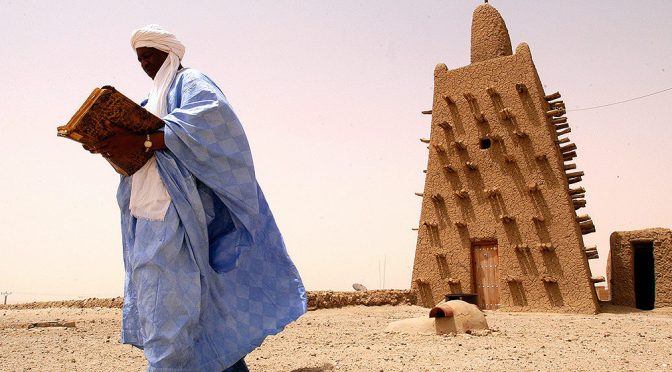
Madrasah Sankore di Timbuktu merupakan salah satu institusi pendidikan tertua dan paling berpengaruh di dunia Islam. Berlokasi di Mali, Afrika Barat, madrasah ini terletak di tepi selatan gurun Sahara. Sejak didirikan pada abad ke-13, Madrasah Sankore telah menjadi simbol kemajuan ilmiah dan kebudayaan dalam sejarah Islam dan Afrika.
Timbuktu, tempat Madrasah Sankore berdiri, mendapatkan keuntungan dari lokasinya yang strategis di jalur perdagangan Trans-Sahara. Kota ini merupakan titik temu antara Afrika Utara dan kawasan sub-Sahara, membuatnya menjadi pusat perdagangan yang penting. Barang-barang seperti garam batu, emas, dan tembaga menjadi komoditas utama yang diperdagangkan di jalur ini. Harga garam batu pada saat itu senilai dengan beberapa ratus gram emas.
Timbuktu
Demografi Timbuktu sangat beragam, mencerminkan berbagai kelompok etnis dan budaya yang berkontribusi pada kekayaan intelektual kota. Penduduknya termasuk kelompok Songhai, Tuareg, dan Fulani, serta pedagang dan cendekiawan yang berasal dari berbagai belahan dunia. Interaksi antarbudaya ini menciptakan lingkungan yang kaya akan ilmu pengetahuan dan tradisi keagamaan, yang sangat mendukung pertumbuhan pendidikan dan penelitian. Timbuktu menjadi salah satu pusat perdagangan yang dikuasai oleh kerajaan Mali.
Perdagangan yang berkembang memberikan dasar ekonomi yang kuat bagi Timbuktu, dan pendidikan serta pembuatan naskah menjadi sumber penghasilan tambahan. Ekonomi yang kuat ini memungkinkan terciptanya infrastruktur yang mendukung kegiatan pendidikan dan intelektual, termasuk pembangunan Madrasah Sankore sebagai pusat pembelajaran.
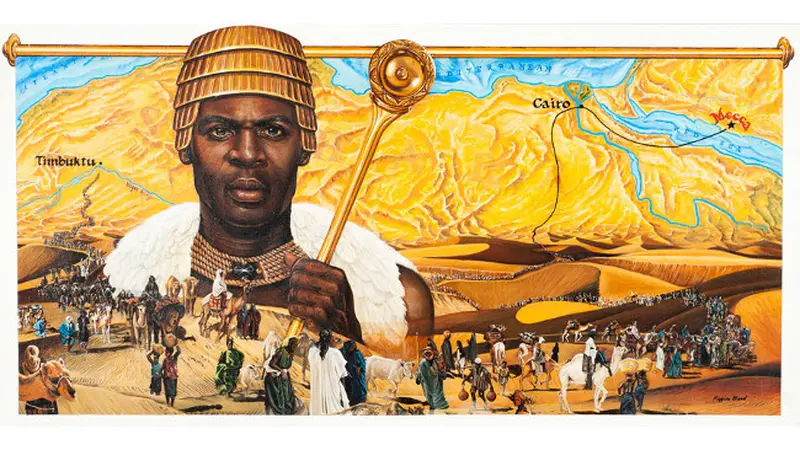
Madrasah Sankore didirikan dengan dukungan finansial dari penguasa lokal dan pedagang kaya. Menjelang era pemerintahan Mansa Musa, peranannya sebagai pusat ilmu semakin diperkukuh dengan banyaknya ulama datang sebagai pengajar. Institusi ini dirancang sebagai pusat pendidikan tinggi, di mana nilai-nilai pendidikan dan penelitian dihargai. Madrasah ini menjadi tempat bagi cendekiawan untuk berkumpul, belajar, dan mengajar berbagai disiplin ilmu, dari teologi dan hukum hingga astronomi dan matematika.
Fokus utama pendidikan di Madrasah Sankore adalah mengintegrasikan pengetahuan religius dan sekuler, dengan penekanan pada pengembangan kemampuan berpikir kritis dan analitis. Metodologi pengajaran yang inovatif, termasuk debat dan diskusi, membantu memperkuat standar akademik dan melahirkan generasi pemikir dan cendekiawan Muslim.
Mansa Musa
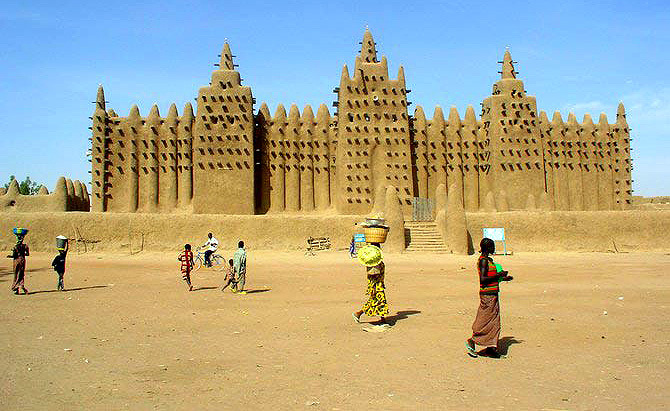
Madrasah Sankore pada awalnya adalah sebuah Masjid, terdapat tiga buah masjid, yakni: Masjid Sankore yang awal telah berdiri sejak abad 12, Masjid Zingereber yang dibangun oleh Mansa Munsa dengan pertolongan Arsitek dari Andalus, Abu Ishaq al-Sahili pada abad 13, dan Masjid Sidi Yahya yang dibangun oleh penguasa keturunan suku Tuareg, Akil Akamalwa.
Keberadaan Madrasah Sankore di Timbuktu tidak hanya meningkatkan status kota sebagai pusat keagamaan dan intelektual tetapi juga sebagai simbol penting dalam sejarah pendidikan Islam. Keberadaan Madrasah ini menjadikan Timbuktu sekelas dengan kota-kota penting Islam lainnya pada masanya seperti Baghdad, Mekkah, Madinah dan Kaherah dari segi keilmuaan. Institusi ini menunjukkan bagaimana pendidikan dapat menjadi alat penting untuk mobilitas sosial dan pelestarian budaya.
Dengan demikian, Madrasah Sankore berperan penting dalam sejarah pendidikan dan ilmu pengetahuan. Warisan dan kontribusinya terhadap dunia Islam dan internasional terus diakui sebagai salah satu pencapaian terbesar dalam sejarah pendidikan global.
Referensi:
Stewart, C. C. (2007). “Islam dan Pendidikan di Afrika Barat: Manuskrip dan Pendidikan Agama di Timbuktu.” Dalam “Islam di Afrika”, diterbitkan oleh Indiana University Press.
Hunwick, J. O. (1999). “Timbuktu dan Sankore University: Gudang Ilmu Pengetahuan Islam Pada Zaman Keemasan.” Diterbitkan dalam jurnal African Research & Documentation.
Saad, E. N. (1983). “Pendidikan Sosial dan Keagamaan di Timbuktu.” Tesis disajikan untuk Universitas California.
Mora, K. (2022, 6 Jun). How Timbuktu Flourished During the Golden Age of Islam. History.
Cartwright, M. (2019, 22 Februari). Timbuktu. World History Encyclopedia.
Jarus, O. (2013, 22 Januari). Timbuktu: History of Fabled Center of Learning. Live Science.
This research uses qualitative methods to investigate the transformation of Qur’anic and Hadith learning in Indonesia through the implementation of Merdeka Curriculum. The focus of the research includes the identification of barriers in traditional religious education, an emphasis on the need for a more dynamic and inclusive teaching approach to these key texts, as well as an explanation of solutions involving the adoption of Merdeka Curriculum. The curriculum incorporates innovative teaching methods, technology and community participation. The results show that traditional religious education in Indonesia is faced with a number of challenges, including monotonous teaching methods, lack of student interaction, and less relevance to contemporary life. Therefore, a more dynamic and inclusive teaching approach is needed to arouse students’ interest and understanding of the Qur’an and Hadith. Merdeka Curriculum is considered a promising solution by bringing together innovative teaching methods, technology and community engagement. Its implementation showed significant improvements in student engagement, understanding, and application of the teachings of the Qur’an and Hadith. In conclusion, curriculum reform through Merdeka Curriculum has an important role to play in strengthening the understanding and appreciation of Islamic principles among students in Indonesia. This more dynamic and inclusive approach can help the younger generation to understand and appreciate the principles of Islam.
Kartini tidak hanya dikenal sebagai pionir emansipasi perempuan di Indonesia, tetapi juga sebagai salah satu sosok yang menghubungkan gagasan pendidikan Barat dengan nilai-nilai keislaman tradisional. Salah satu interaksi penting yang membentuk pandangannya adalah hubungannya dengan KH Sholeh Darat. Melalui dialog dengan Kyai Sholeh, Kartini mendapatkan pemahaman yang lebih dalam tentang bagaimana pendidikan dapat diintegrasikan dengan nilai-nilai keislaman, yang kemudian memperkuat semangatnya dalam memperjuangkan hak-hak pendidikan untuk kaum marginal, khususnya perempuan.
Sebuah gambaran umum tentang kemajuan signifikan pendidikan yang telah dicapai oleh Indonesia adalah dalam memberikan akses pendidikan untuk semua gender. Dari program wajib belajar yang mencakup sekolah dasar hingga sekolah menengah, Indonesia telah melihat peningkatan dalam literasi dan akses pendidikan formal. UNESCO mencatat bahwa partisipasi sekolah di Indonesia nyaris mencapai angka universal untuk pendidikan dasar dan menengah.
Meskipun demikian, di daerah pedesaan dan di kelompok adat, masih sering menghadapi hambatan dalam mengakses pendidikan berkualitas. Kaum perempuan jika dibandingkan dengan laki-laki, mereka lebih sering mengalami kesulitan yang disebabkan oleh faktor geografis, ekonomi, dan sosial-kultural. Terlebih lagi di daerah rural dan terpencil, jika masyarakat daerah memiliki partisipasi pendidikan yang rendah, apalagi tingkat partisipasi untuk kaum marginal, khususnya perempuan.
Akan tetapi kesuksesan akses pendidikan tersbeut masih memiliki kendala pada transisi dari pendidikan menengah ke perguruan tinggi yang menampilkan kesenjangan yang lebih mencolok, khususnya bagi perempuan dari kelompok marginal. Data dari Kementerian Pendidikan menunjukkan bahwa terdapat disparitas gender yang signifikan dalam akses ke pendidikan tinggi. Faktor ekonomi, norma sosial yang mendukung patriarki, dan keterbatasan informasi tentang pendidikan tinggi adalah beberapa hambatan utama yang mempengaruhi partisipasi perempuan.
Banyak perempuan terpaksa menunda atau membatalkan rencana pendidikan tinggi karena alasan ekonomi atau tanggung jawab sosial, seperti pernikahan dini atau harus merawat anggota keluarga. Hal ini menunjukkan perlunya upaya lebih lanjut untuk memastikan kesetaraan dalam akses pendidikan tinggi.
Wawasan Kartini tidak lepas dari pengaruh KH Sholeh Darat, yang dikenal sebagai salah satu tokoh pembaruan Islam di Jawa. Melalui korespondensi dan diskusi, Kartini menyerap banyak pelajaran tentang bagaimana pendidikan Islam dan pemikiran keagamaan bisa berkontribusi terhadap emansipasi sosial, khususnya bagi perempuan. Mbah Sholeh memberikan perspektif yang membantu Kartini menggabungkan idealisme barat dengan nilai-nilai keislaman, memperkuat keyakinannya bahwa pendidikan harus dijangkau oleh semua lapisan masyarakat, termasuk perempuan dan seluruh kelompok marginal tanpa terkecuali.
Untuk mengatasi ketimpangan ini, pemerintah dan berbagai NGO swasta perlu lebih sigap dalam inisiatif untuk memperluas akses dan kualitas pendidikan kaum marginal, termasuk beasiswa khusus dan program pendidikan keuangan ataupun yang menstimulus kemandirian. Kesadaran akan pentingnya pendidikan yang setara juga perlu didorong melalui kampanye dan program pemberdayaan di pedesaan dan daerah terpencil.
Ide dan semangat emansisipasi Kartini dan juga tokoh penggerak perempuan lainnya masih terus digaungkan setiap tahunnya. Ide-ide tentang kesetaraan akses pendidikan terus menginspirasi perjuangan untuk pendidikan kaum marginal di Indonesia. Pendidikan yang berkualitas yang inklusif, yang menggabungkan nilai-nilai keislaman dan modernitas, adalah kunci untuk mencapai kesetaraan dan pemberdayaan yang adil dan merata. Peringatan Kartini setiap tahun mengingatkan kita terus pada kebutuhan akan pendidikan yang merata dan adil, sebuah impian yang masih terus diupayakan dan menjadi tugas kita semua di Indonesia.