Tag: Artificial Intelligence

  • Eco-Green Catalys: An Intelligent Distribution Network for Generative Mycorrhizal Spores Through AI and Iot Optimization for Ecological Complexity Engineering in Post-Deforestation Lands Based on Restorative Bio-Economy Principles

    Eco-Green Catalys: An Intelligent Distribution Network for Generative Mycorrhizal Spores Through AI and Iot Optimization for Ecological Complexity Engineering in Post-Deforestation Lands Based on Restorative Bio-Economy Principles

    The ecological crisis caused by illegal deforestation has resulted in severe soil degradation, biodiversity loss, and disruption of ecosystem balance. Eco-Green Catalys emerges as an adaptive biotechnological innovation integrating Artificial Intelligence (AI) and the Internet of Things (IoT) to accelerate the restoration of post-deforestation lands. This system operates through an intelligent distribution network of generative mycorrhizal spores, which precisely controls inoculation, moisture regulation, and nutrient delivery based on real-time soil data analysis. Supported by a Spatio-Temporal Deep Learning (STDL-AI) framework, the system demonstrates up to 96% accuracy in ecological monitoring, enhances vegetation recovery rates by 70%, and increases carbon sequestration capacity by 35% compared to conventional restoration methods. Beyond ecological rehabilitation, this innovation reinforces the principles of restorative bio-economy by utilizing renewable energy sources and community-based participation, aligning with the Sustainable Development Goals (SDG 13) on climate action and long-term ecological resilience. Overall, Eco-Green Catalys provides a scalable and data-driven model that bridges environmental technology and socio-economic sustainability in restoring tropical ecosystems.

  • Waqf-Based Financing Models for Integrating Artificial Intelligence into Nigerian Educational Curriculum: Infrastructure, Policy, and Sustainability Perspectives

    Waqf-Based Financing Models for Integrating Artificial Intelligence into Nigerian Educational Curriculum: Infrastructure, Policy, and Sustainability Perspectives

    The integration of Artificial Intelligence (AI) in education is a growing global priority, particularly in addressing digital competencies and improving teaching quality. However, Nigeria faces significant challenges in adopting AI due to inadequate infrastructure, investment, and skilled personnel. This chapter discusses the potential of waqf (Islamic endowment) as a sustainable funding strategy to support AI in education, focusing on infrastructure, policy alignment, and long-term sustainability. It highlights traditional waqf’s historical role in financing education and proposes a waqf-based financing model that incorporates infrastructural development, governance frameworks, and sustainability. This research employs a qualitative and conceptual layout focused on Islamic social finance literature and artificial intelligence in education and infrastructural development in Nigeria. It uses a comparative analysis of successful waqf-based educational financing models from selected Muslim countries, proposing a conceptual framework for a waqf financing model that integrates infrastructure development, policy alignment, governance structures, and sustainability mechanisms for AI in education. This approach aims to reposition waqf to support digital transformation, reduce educational inequality, and promote sustainable educational advancement in Nigeria. The model aims to bridge the digital divide through well-targeted waqf investments, promoting equitable access to education. It also calls for regulatory support for waqf integration into national strategies and emphasizes governance transparency. By fostering human capital development among educators and addressing ethical concerns, waqf initiatives can ensure responsible AI integration. The chapter draws insights from successful waqf models in other countries to advocate for a strategic reorientation of Islamic finance to meet technological needs in Nigeria’s education system, ultimately fostering educational innovation and sustainable development.

  • AI Integration in Nigeria’s Financial Sector: Challenges and Opportunities for Professional Development

    AI Integration in Nigeria’s Financial Sector: Challenges and Opportunities for Professional Development

    Artificial Intelligence (AI) is transforming banking, accounting, auditing, risk management, and customer service operations. In Nigeria, the integration of AI into the financial sector presents both unprecedented opportunities and significant challenges. This study examines the implications of AI adoption for professional development among Nigerian finance practitioners. Based on the frameworks of technological diffusion and human capital development, the research investigates how AI-driven tools like machine learning, natural language processing, robotic process automation, and predictive analytics are influencing financial practices and the skills required of professionals. The study uses a mixed-methods approach, combining survey data from finance professionals in selected Nigerian banks and fintech firms with qualitative interviews with regulators, educators, and technology experts. In addition to highlighting important opportunities like increased productivity, fraud detection, financial inclusion, and better decision-making, the findings are anticipated to point out significant obstacles like job displacement, ethical dilemmas, regulatory gaps, and a lack of professional AI literacy.  In order to create a workforce prepared for AI, the study emphasizes the necessity of ongoing professional development, curriculum change in finance and accounting education, and cooperative efforts between the government, business community, and professional associations. The study conclude that effective AI integration in Nigeria’s financial sector depends not only on the availability of technology but also on giving finance professionals the knowledge, moral compass, and flexible abilities they need to prosper in the age of digital transformation.

  • Robot adalah Teman

    Robot adalah Teman

    “Ah, jadi kamu bisa membuat robot-robot seperti di Transformer? Lalu, kapan robot akan mengambil alih dunia dari manusia?” tanya si petugas imigrasi di Heathrow saat mengetahui bahwa aku adalah mahasiswa robotika.

    Aku hanya tertawa sebagai jawaban. Rupa-rupanya, science fiction, yang justru menjadi inspirasi awal ilmu robotika dan bahkan yang pertama kali memuculkan istilah robot, telah ikut serta membangun persepsi bahwa robot adalah entitas jahat yang kelak suatu hari nanti akan mengancam eksistensi manusia.

    Pertanyaan itu pun mengingatkanku pada sebuah adegan dalam serial A Song of Ice and Fire karya George R. R. Martin. Di buku ketiga, A Storm of Sword, dikisahkan bagaimana Jon Snow bersama rombongan wildlings berusaha menembus The Wall, tembok tinggi yang selama ini melindungi Seven Kingdoms. Saat itu, Jon Snow teringat bagaimana Lord Eddard Stark berpesan kepadanya, “A wall is only as strong as the men who defend it.

    Benarkah robot akan mengambil alih dunia dari manusia? Aku tidak tahu. Yang kutahu, seperti kata-kata Lord Eddard tadi, “A robot is only as good as the men who create it.” Bahwa robot bisa digunakan untuk berbagai tujuan yang tidak baik, memang tidak salah. Tapi, tujuan-tujuan baik yang bisa dicapai dengan robot juga tak terhitung banyaknya. Bahkan, dua topik yang paling hangat dibicarakan saat aku berkesempatan menghadiri International Conference on Robotics and Automation di Swedia bulan Mei lalu, adalah Surgical Robotsdan Safe Human-Robot Interaction.

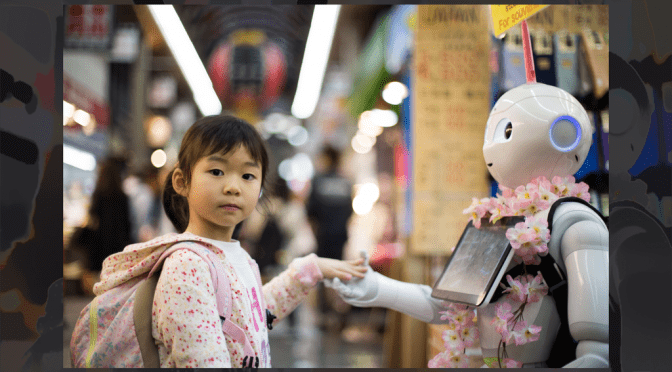
    Bagiku sederhana saja, meniru kata-kata Captain Tsubasa: robot, sekarang dan seterusnya, adalah teman. Dan sebagai teman, tak ada yang perlu ditakutkan darinya. Kamu bisa menggandeng tangannya, memeluknya, dan menyayanginya. Bahkan, diajak berdansa pun ia tak akan (bisa) menolak!

    Jadi bisa nggak sih robot mempunyai kesadaran dan kehendak bebas untuk melakukan apa pun yang ia mau? Mungkin nggak ya robot memberontak melawan manusia dan menguasai dunia? Haruskah kita takut pada ancaman robot masa depan? Di video ini, Jago Robotika akan mengenalkan tentang perkembangan kecerdasan buatan dan robotika, mulai dari Turing Test, konsep kesadaran, hingga 3 Hukum Robotika Asimov, untuk mengupas kemungkinan robot menguasai dunia.

    Sebenarnya Manusia lah yang perlu ditakuti, karena mereka lah, bukan yang lain, sumber kejahatan yang sesungguhnya.