The implementation of the Merdeka Curriculum emphasizes differentiated learning that accommodates students’ diverse abilities, interests, and learning needs. In chemistry education, this approach is particularly important because students often experience difficulties in understanding abstract concepts that require strong conceptual reasoning. This study aims to examine the implementation of the Merdeka Curriculum in chemistry learning through a tutoring program at Madrasah Aliyah Darul Funun El Abbassiyyah. A descriptive qualitative research design was employed to provide an in-depth description of the implementation process. The study used the researcher as the primary research instrument, while data were collected through classroom observations and interviews. The collected data were analyzed descriptively by identifying and interpreting phenomena related to the implementation of tutoring in chemistry learning. The findings reveal that students possess diverse levels of academic ability, learning interests, and talents, requiring instructional approaches that extend beyond regular classroom teaching. The school implements an additional tutoring program outside regular instructional hours to provide more personalized guidance according to students’ characteristics and academic potential. Through this program, teachers are able to identify students’ competencies, monitor their conceptual understanding of chemistry, and facilitate the development of their interests and talents. The tutoring activities also support students’ preparation for academic competitions, including the National Science Olympiad (OSN) and the Madrasah Science Competition (KSM), where students have achieved notable accomplishments. These findings indicate that tutoring serves as an effective strategy for implementing the principles of the Merdeka Curriculum by supporting differentiated instruction and optimizing students’ academic development. The study concludes that integrating tutoring into chemistry learning provides meaningful opportunities for identifying and developing students’ competencies, interests, and talents, while strengthening the implementation of the Merdeka Curriculum in the Madrasah context.
As a center for learning about the Islamic religion, Pondok Pesantren is the best place to read and study the Quran, which is the main source and reference for Muslim behaviour. However, not all beginners who study religious knowledge at Pondok Pesantren have the ability and fluency to read the Quran. The location of this research is at the Pondok Pesantren Perguruan Darulfunun El-Abbasiyah, Limapuluh Kota Regency. This research is a report on the implementation of increasing Quran reading literacy with a recitation program for early students at the Tsanawiyah or Aliyah formal education level. Research on the implementation of this recitation program uses the DOE method, also using observation, interview and continuous evaluation techniques. Implementation is evaluated repeatedly against the targets achieved by students in each semester. The results of the implementation of this program show that the implementation of the recitation program is considered effective in increasing students’ Quran reading literacy. This is because the application of the recitation program is very appropriate as an effort to speed up the fluency of reading the al-Quran for students who experience delays in reading the Al-Quran. This report is useful for the institution in particular and the development of Al-Quran reading skills for the entire community in general.
This research discusses the implementation of the RFID ID Card attendance system in the context of salary management and teacher and employee discipline at Darulfunun El-Abbasiyah College. The main objective of this research is to identify how the application of RFID ID Card technology in an attendance system can influence salary management and the level of discipline among teachers and employees in an institution or organization. The research method used is a descriptive method with a case study approach, then analyzed qualitatively to describe the impact of implementing the RFID ID Card attendance system on salary management and discipline. The results of this research show that the implementation of the RFID ID Card attendance system has several significant impacts. First, in terms of salary management, this system allows more accurate salary calculations based on real absences, reduces calculation errors, and minimizes the potential for system abuse. Second, regarding discipline, this system tends to increase the discipline of teachers and employees because their attendance is recorded accurately. This can also reduce the tendency to be late or absent from work for no apparent reason. Although implementing an RFID ID Card attendance system provides various benefits, this research also identified several challenges. The main challenges include the need for adequate training for system users, regular maintenance of RFID ID Card technology, and the importance of maintaining the privacy and security of user data. Overall, this research concludes that implementing an RFID ID Card attendance system can have a positive impact on salary management, discipline of employees, and quality improvement. However, successful implementation depends on a good understanding of this technology, adequate training, and appropriate actions to overcome challenges that may arise.
The process of managing student data which is still manual makes the governance of educational institutions less than optimal. Often invalid input data and unsynchronized data are caused by the unavailability of a good system for managing it. This makes management unable to create transparency in internal processes, so it will take a lot of time and energy. This article is a technical report on the implementation of the website-based student information system design process. This implementation was carried out at Darulfunun El-Abbasiyah College from January 2019 to July 2023. This implementation process involved many stages of development and improved versions. This system is also tested directly in management and receives input to be improved and then tested again. The development of the student information system helps supervision, avoiding misuse and inaccuracy of information. This student information system also reduces misunderstandings with parents, guardians, religious ministries and education offices due to data that is inaccurate or cannot be presented within a certain time.
* Tan Abdullah A Afifi ST MT, Pimpinan PPM Perguruan Darulfunun dan juga alumni MAN Insan Cendekia Serpong angkatan ke-5, berdialog langsung dengan pak Habibie tentang pengembangan SDM Indonesia bersama ILC (IAIC Learning Center). Saat ini aktif mendorong inovasi pendidikan di Sumatera Barat, khususnya Payakumbuh dan Lima Puluh Kota.
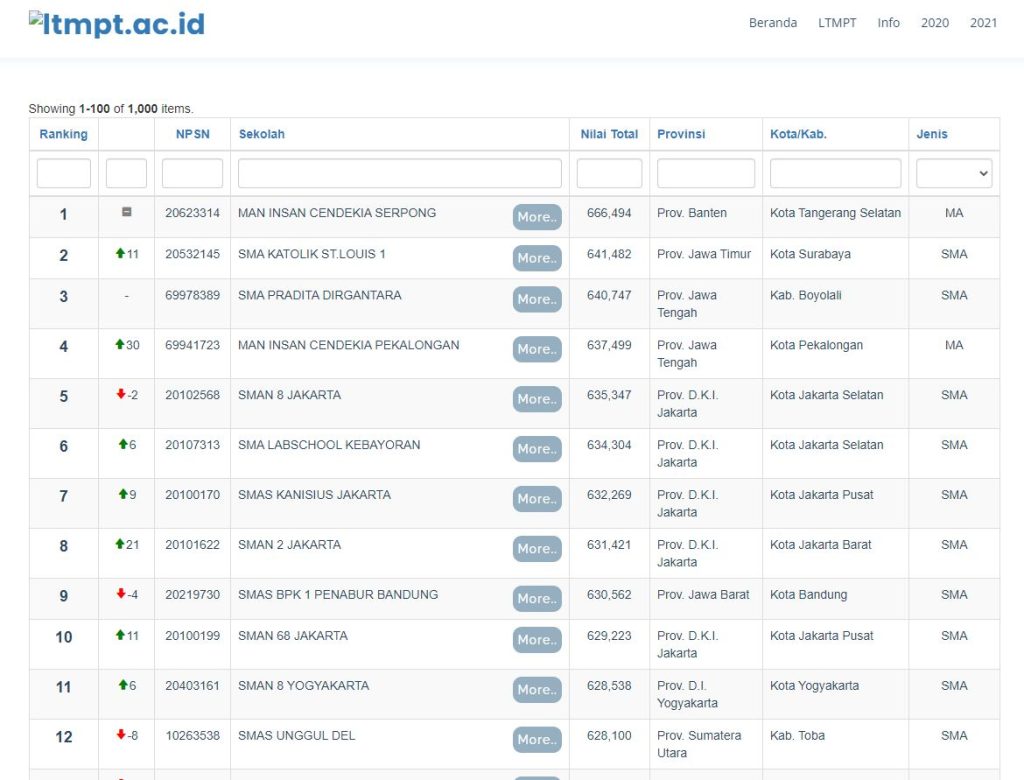
Payakumbuh (16/04), MAN Insan Cendekia Serpong kembali menjadi peringkat pertama dari daftar 1000 sekolah terbaik versi LTMPT Kemdikbud berdasarkan nilai UTBK 2022.
Banyak orang tua yang mencari-cari pendidikan yang terbaik untuk anak-anaknya, tidak jarang di sekitar tahun 1980-1990 an sebagian masyarakat bahkan tidak jarang menyekolahkan anak-anaknya di sekolah terbaik di kota-kota tersebut yang tidak jarang adalah swasta kristen karena bagusnya pembelajaran di sekolah tersebut.
Sumber: https://top-1000-sekolah.ltmpt.ac.id/
Pada dasarnya orang tua ingin menjatuhkan pilihan SMA yang berbasis pendidikan Islam, tentunya orangtua berharap kelak anaknya selain pandai ilmu keduniawian juga pandai dalam ilmu keagamaan. Akan tetapi metode pembelajaran yang monoton dan kurangnya visi dalam pengembangan karir siswa yang riil menjadi salah satu keengganan orang tua untuk mengirimkan anak-anaknya ke sekolah tersebut.
Kondisi tersebut menjadikan sekolah-sekolah Islam harus berbenah cepat, walaupun memakan waktu hampir 10-20 tahun, beberapa sekolah Islam mulai bermunculan. Dimulai dari pengembangan sekolah model yang dilakukan oleh UIN Syarif Hidayatullah di Madrasah Ibtidaiyah dan Tsanawiyah Pembangunan UIN Syarif Hidayatullah. Pengembangan model sekolah ini juga adalah laboratorium pengembangan kurikulum dan metode belajar yang dilakukan oleh Fakultas Tarbiyah dari Universitas yang sama.
Walaupun begitu model pengembangan sekolah tingkat SMA masih belum memberikan hasil yang signifikan, hingga munculnya pengembangan sekolah model (magnet school) yang digagas oleh BPPT dan ICMI yang bernama SMU Insan Cendekia dibawah arahan langsung bapak BJ Habibie. Lokasi pengembangan sekolah ini berada di dua tempat, yang pertama adalah di Serpong dekat dengan Puspitek Serpong dan yang kedua adalah di Gorontalo, memanfaatkan hibah tanah dari keluarga BJ Habibie.
Angkatan pertama sekolah ini hanya berjumlah 1 kelas kurang dengan siswa dari berbagai Pondok Pesantren pada tahun 1996. Kemudian pada tahun 2001 pengelolaan sekolah ini dialihkan kepada Kementerian Agama, dan kemudian menjadi MAN Insan Cendekia.
Setidaknya menurut penulis MAN Insan Cendekia telah memberikan satu revolusi besar dari sistem pengelolaan Pendidikan Islam yang didasari kepada:
Sistem good governance, manajemen yang rapi
Input siswa yang terselektif, kemampuan siswa yang cocok untuk sistem pembelajaran di MANIC
Orang tua yang terselektif, orang tua yang percaya dan siap dengan konsekuensi pembelajaran di MANIC, termasuk dalam hal pembiayaan.
Guru-guru yang siap, fokus dan berdedikasi dengan sistem pembelajaran di MANIC.
Support system yang juga siap.
Birokrasi yang independen, tidak mudah di intervensi oleh birokrasi walaupun dibawah kelembagan pemerintah.
Fasilitas yang memadai
Partisipasi kompetisi yang terselektif dan terstandarisasi tinggi
Berasrama penuh, full boarding.
dan lain sebagainya
Dengan pola pengembangan pembelajaran yang berasrama, kegiatan-kegiatan siswa dan guru lebih terfokus untuk mengejar visi dari sekolah, dan tidak mudah tersibukkan dengan kegiatan-kegiatan yang tidak berhubungan dengan sekolah ataupun pembelajaran. Dan yang tidak kalah penting adalah konsistensi dengan cara metode pembelajaran dan visi dari pengembangan pembelajaran.
Hasil dari pendekatan pengembangan pembelajaran MAN Insan Cendekia alhamdulillah sampai saat ini masih menjadi salah satu inspirasi bakal standarisasi pengembangan kurikulum Madrasah Nasional bersama sekolah-sekolah agama berprestasi lainnya. Tidak dipungkiri dalam kurun waktu 2 dekade belakangan ini, MAN Insan Cendekia telah menjadi model baru pengembangan Pendidikan Islam di Indonesia.
Kita harapkan semakin banyak institusi-institusi pendidikan yang terinspirasi dan juga tidak kalah penting yang mampu memberikan alternatif pendidikan berkualitas kepada masyarakat, sehingga masyarakat yang maju adalah masyarakat yang beradab.
Tentunya masih banyak lagi pendekatan-pendekatan yang lebih detail yang dilakukan oleh MAN Insan Cendekia yang belum mampu penulis ulas dalam tulisan ini. Semoga dapat dilanjutkan dalam kesempatan berikutnya. Penulis juga menyampaikan takzim dengan seluruh civitas dan guru-guru di MAN Insan Cendekia yang pantang berputus asa dalam mendidik, semoga Allah beri ganjaran pahala yang berlipat ganda.